Mastering Skiing Skills

Raghu Yadav
| 08-12-2025
 · Sport Team
Skiing can be an exhilarating sport, but once you've mastered the basics, it's time to level up your skills.
Whether you want to carve down the slopes with precision or navigate tricky terrain with ease, advancing your technique is key.
Here's a guide on how to master different skiing techniques and turning styles to boost your confidence and performance on the mountain.
Mastering Edge Control: Carving with Precision
The ability to control your edges is one of the most crucial skills in advanced skiing. Edge control allows you to carve smooth, controlled turns and helps you handle steeper slopes with more confidence.
To carve effectively, you need to apply pressure to the inside edge of your skis. The more pressure you put on the edge, the sharper the turn will be. Focus on leaning slightly forward, maintaining a strong core, and keeping your weight centered over your skis. Remember, the more controlled you are with your edges, the better your turns will flow.
Tip: Practice on gentler slopes before tackling steep hills. Gradually increase the pressure on your edges to get a feel for carving. A common mistake is applying too much pressure at first, which can cause you to lose control. Aim for smooth, gradual turns instead of sharp, jerky movements.
Advanced Turning Techniques: From Parallel to Dynamic Turns
Once you've mastered basic parallel turns, you can start incorporating more advanced turning techniques into your skiing. Dynamic turns, such as the "stem christie" or "telemark" turns, are perfect for intermediate and advanced skiers who want to add fluidity and style to their movements.
For the stem christie, start with your skis in a slight wedge position. As you move through the turn, shift your weight to your edges and bring the skis parallel. This turn is excellent for controlling speed on steeper slopes. Meanwhile, telemark turns require a bit more balance and strength, as you bend one knee and keep the other leg straight as you turn. It's perfect for advanced skiers who want to challenge their coordination and flexibility.
Tip: Practice switching between different types of turns to gain versatility in your skills. A great way to master dynamic turns is to break them down step by step on flatter terrain before trying them on steeper slopes.
Handling Variable Terrain: Skiing Off-Piste
Skiing off-piste, or skiing in ungroomed terrain, presents new challenges. The snow conditions can vary greatly, from powder to icy patches, and knowing how to adjust your technique is essential for staying in control.
When skiing in deep powder, it's important to keep your weight centered and maintain a wider stance. This prevents you from sinking too deeply and helps you glide across the snow. On icy patches, focus on maintaining a low center of gravity and use a more aggressive edge control. Remember, you might need to make quicker, smaller turns to maintain speed on rough terrain.
Tip: Always be cautious when venturing off-piste, especially if you're unfamiliar with the terrain. Practice on softer, less challenging off-piste areas before tackling deeper powder or more rugged terrain.
Improving Speed Control: The Art of Braking
Advanced skiers often need to manage their speed, especially when descending steeper slopes. Learning how to brake effectively while maintaining control is an essential skill.
The most common method of braking is the snowplow or wedge position. To perform this, slightly angle the tips of your skis inward while keeping your tails apart. This creates more drag, slowing you down. For more experienced skiers, the "hockey stop" is an advanced braking technique. You shift your weight to the inside edge of your skis, pivot, and skid to a stop. This move requires quick reflexes and balance but is an excellent tool for controlling speed in a hurry.
Tip: Practice braking in different conditions—on steep slopes, icy patches, and soft snow—to get a feel for how your skis react. Having multiple braking techniques will help you stay safe and comfortable in varying conditions.
Confidence and Body Positioning: The Secret to Success
Skiing with confidence is often the key to mastering advanced techniques. Your body position plays a huge role in maintaining control while skiing at higher speeds or on more challenging slopes.
Keep your knees slightly bent, your hips forward, and your back straight to maintain a balanced stance. Your arms should be slightly in front of you for better control. When turning, your body should follow your skis, allowing for smoother transitions. By maintaining a strong core and flexible posture, you'll find it easier to make quick adjustments and react to changing terrain.
Tip: Try to ski with a relaxed mindset—tension can limit your movement and cause mistakes. Take time to build confidence in your movements, and with practice, you'll find yourself skiing with greater fluidity and ease.
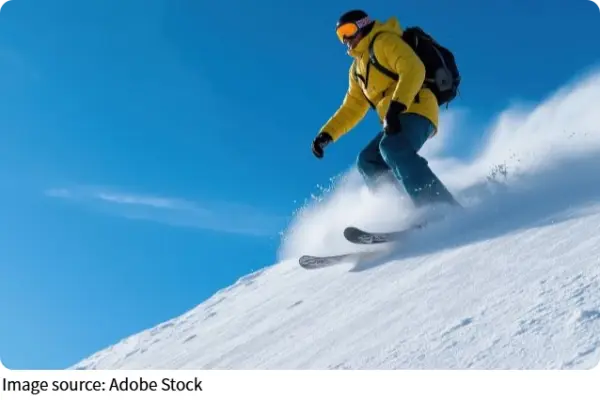
Mastering advanced skiing techniques takes time and practice, but with each new skill you learn, your ability to navigate the slopes will improve dramatically. By refining your edge control, experimenting with different turning techniques, and staying confident in challenging terrain, you'll be ready to tackle even the most advanced ski runs. So, hit the slopes with purpose, and keep pushing your limits—you're only a few turns away from skiing like a pro.